The entryway is the very first experience of a home, the space where life transitions from the outside world into something more personal, more intentional. When we think about how to design a functional entryway, we’re not just thinking about where shoes land or where coats hang, but also about how a space feels the moment you step inside.
Over the years, we’ve incorporated many different entryway designs into our custom homes, each shaped by the lifestyle, personality, and priorities of the families who live there. In this post, we’re sharing five real entryways we’ve designed, highlighting the features we love most and why these thoughtful details continue to stand the test of time.
1. A Flexible Entryway for Smaller, Open-Concept Spaces
Not every home calls for a secluded or traditional foyer, and we love designing entryways that feel intentional even when space is limited. In this design, the entry opens directly into the main living area, which can still be beautiful and functional when approached thoughtfully. One of the ways we addressed this was by incorporating a barn door that can slide closed when privacy is needed. It offers flexibility without requiring the swing space of a traditional door, which is often an important consideration when thinking through how to design a functional entryway in tighter layouts.
Natural light was another key factor in this space. This home is west-facing and receives strong light from the front in the afternoon, we incorporated a 24-light, French-inspired double door that completely transformed the feel of the entry. The abundance of glass allows light to filter in beautifully, keeping the space from feeling closed off or dim.
We also chose to anchor the area with a large piece of art, which helps the entry feel intentional rather than forgotten. It is one of those basics of interior design that you should know about. In smaller spaces especially, scale matters. Thoughtfully using every inch, whether through architectural choices, lighting, or focal points, is often what separates an entryway that feels temporary from one that feels purposeful and complete.

2. Modern Architecture with a Barrel Vault Ceiling
In The Boer project, we explored a more architectural interpretation of how to design a functional entryway, centered around a striking barrel vault ceiling that immediately draws the eye upward. This curved ceiling detail creates a sense of movement and softness while still feeling modern, making the entryway feel intentional rather than transitional.
To complement the architecture, we selected arched all-glass steel double doors as the focal point of the space. These doors are a true masterpiece in both form and function. The steel framing offers a sense of strength and security, while the expansive glass panels allow natural light to pour into the home. When considering how to design a functional entryway in more modest-sized spaces, glass doors are especially impactful because they help blur the boundary between indoors and outdoors, making the space feel larger and more open.
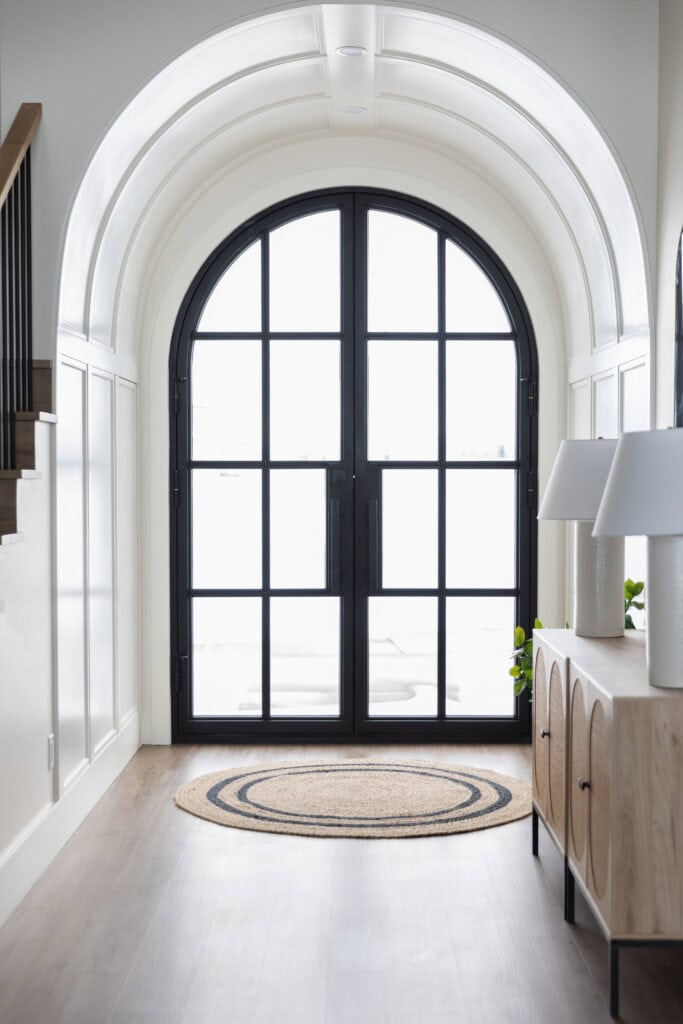
The pairing of the arched doors with the barrel vault ceiling creates a cohesive architectural moment that feels elevated yet yet fitting and approachable. It’s one of those details that guests immediately notice but that homeowners also get to appreciate every single day. Thoughtful choices like these are why we return to elements such as the barrel vault ceiling again and again in our designs. They add character, depth, and a sense of timeless intention to the very first space you experience in the home.
One of our favorite details in this entryway is easy to miss at first glance and that’s exactly the point. Tucked along both walls, the wainscoting isn’t just decorative paneling; it discreetly conceals a set of hidden closets. Designed to blend perfectly into the architecture, the doors read as part of the millwork rather than traditional storage. The result is an entry that feels clean, calm, and intentional, while still offering generous, highly functional storage right where it matters most. It’s a quiet design move that proves how thoughtful craftsmanship can elevate both form and function without ever asking for attention.
3. A Traditional Foyer with Timeless Character
This entryway design leans into a more traditional approach, creating a defined foyer that feels both welcoming and intentional. The shoulder arch doorway gently separates the entry from the rest of the home, giving guests a moment to arrive while offering homeowners a bit of privacy before the full living space opens up. It’s a great example of how to design a functional entryway that feels grounded and calm rather than rushed or exposed.

In this project, we used a runner to naturally guide you inward, shaping the experience of the space. A console table with sophisticated decor anchors the wall, providing a practical surface for everyday essentials like keys, a purse, or mail when you walk through the door. These small details are often what define how to design a functional entryway that truly supports daily routines.
What we love most about this style of foyer is its flexibility. Depending on the lifestyle of the family, this space can easily evolve to include a bench for taking off shoes, an umbrella holder for rainy days, a coat rack or hooks for backpacks and jackets, or additional storage for seasonal items. It’s a timeless layout that adapts beautifully to the way each household lives.
4. Dutch Doors + Family-Friendly Function
One of our favorite ways to explore how to design a functional entryway is through spaces that are designed for real life, and the mudroom entryway in The Charles is a perfect example. In this custom home, we incorporated a charming Dutch door to create an inviting first impression while also allowing natural light and fresh air to flow through the space. It’s a simple architectural detail that instantly communicates warmth and intention, which is often at the heart of how to design a functional entryway that feels both beautiful and livable.

For this home, we paired the Dutch door with custom built-ins finished in Nicolson Red by Benjamin Moore, a bold yet timeless color choice that gives the entryway its own sense of identity. These built-ins were thoughtfully designed to support everyday routines: storage for outdoor clothing for kids who love to play outside, space for hiking boots, cubbies for backpacks, and room for leashes for dog owners. When thinking through how to design a functional entryway, these practical details are what allow a space to truly work for the people living in it.
We also love when clients choose to take this concept a step further by incorporating features like a drinking fountain, making it easy for kids to run in and grab a drink while playing outside. Bench seating was another intentional element in The Charles, offering a comfortable place to sit while putting on or taking off shoes, with space below to neatly store footwear. It’s these layered, thoughtful decisions that consistently guide our approach to how to design a functional entryway that feels personal, purposeful, and timeless.
5. A Formal, Light-Filled Statement Entry
Our recent Parade of Homes entryway design leans into a more formal, architectural approach to how to design a functional entryway while still feeling warm and welcoming. This is the kind of space that makes an immediate impression the moment you walk through the front door. It offers a sense of scale and intention that sets the tone for the entire home.
In this design, the entry opens into a large, airy space where the architecture does much of the storytelling. A grand staircase with a sweeping runner lines the opposite wall, while carefully placed sconces guide the eye upward and add a soft, layered glow in the evenings. These are the types of thoughtful details we often consider when exploring how to design a functional entryway that feels elevated without feeling cold.
At the center of the space, a large round area rug anchors a marble dining table used as a statement piece, topped with styling that feels collected and personal. A favorite piece of art hangs nearby, creating a moment of connection and personality right at the front of the home. Abundant natural light pours in through an eight-light front door and surrounding windows, reinforcing that sense of openness and calm. This is another expression of how to design a functional entryway that balances beauty, experience, and everyday livability.

Every entryway tells a story, and the most meaningful ones are designed with intention, care, and the people who live there at the center of every decision. Whether your style leans traditional, modern, or somewhere in between, the details you choose at the front door have the power to shape how your entire home feels each day. If you’re beginning to dream about building a home of your own and feel drawn to this approach to design, we’d love to connect. Reach out to our team and let’s start the conversation about building your next custom home in Twin Falls, Burley or Sun Valley, Idaho.


Book A Consultation
Let's get to know each other. Contact us through our client inquiry form! We'd love to talk with you about your custom home project and get to know you better.
During an initial consultation, we will discuss the priorities you have for your home, your planned investment, and your personal style.
Book Now
More Posts

Best Home Office Setup

5 Outdoor Living Spaces for Your Home
The Best Interior Paint Colors from Our Magic Valley Parade Home